
by Mia Taylor
Last updated: 3:25 PM ET, Wed February 11, 2026
Emerging destinations in lesser-known regions across Europe—including alternatives like Southern Finland and Poland—are attracting growing interest among international travelers.
It's a development that may be helping ease some of the intense demand and overtourism plaguing more well-known destinations. The emerging shift may even be creating a more "balanced distribution" of visitors, according to a newly released report from Mabrian and Data Appeal, which was presented at the 11th European Travel Commission (ETC) Annual Meeting in Estonia.
The report examined travel patterns from six key markets: the United States, Canada, Australia, China, Japan and South Korea. Forecasts from the European Travel Commission and Tourism Economics indicate that by 2029, more than 1 in 10 travelers visiting Europe will come from these six countries. What's more, by 2029, over half of visitors to Europe will come from the United States.
The analysis of travel patterns for these six countries revealed a growing appeal of a handful of northern European locations, including:
- Southern Finland
- Vestland, Norway
- Northern areas of Spain, including Galicia
- Trentino-Alto Adige, Italy
- Normandy and Alsace, France
In particular, these locations are becoming an increasingly attractive
alternative to more traditional destinations that have long been the
first choice for summer vacations.
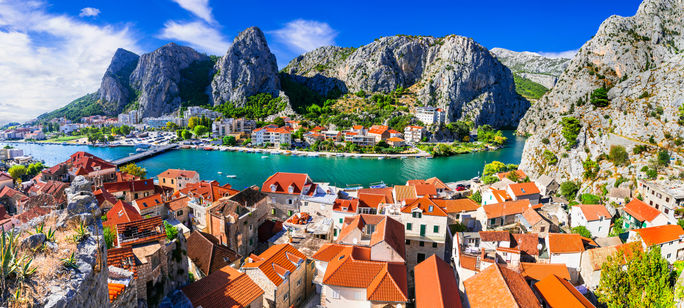
Aerial view of Omis, Croatia. (Photo Credit: Freesurf/Adobe Stock)
Central Europe grows in popularity
Another
notable trend unearthed by the report is the rise in popularity of
Central European destinations. That includes destinations like Croatia,
alongside the increasing appeal of less crowded coastal destinations in
Greece (Ionian Islands) and Türkiye (Marmara Region).
And that's
not all, destinations that strongly represent European cultural
heritage are also experiencing growing visitation. In this case,
examples include Central Anatolia in Türkiye and Galway County, Ireland.
All of the emerging destinations share a key
characteristic, the report explains. While culture remains an important
part of the decision-making process for international travelers, "nature
and active tourism" are also primary drivers behind the choice of these emerging alternatives.
The high-level
takeaway from these growing travel patterns, according to a Mabrian
spokesperson, is that there's opportunities for "territorial
and seasonal tourism dispersion" of global tourists. (Which should be good news
amid this era of overtourism in places like Barcelona, Venice and
Rome.)
But to help further facilitate that transition, alternative
destinations must provide "a comprehensive range of tourist products and
services." That includes fully operational "accommodations designed to meet the preferences and needs of these long-haul travelers."
For the latest travel news, updates and deals, subscribe to the daily TravelPulse newsletter.
Topics From This Article to Explore


